
Already a member? Sign in
About Of Me
This started as a work problem. It turned into a family one.
Of Me is not a startup with a mission statement. It is one person, a laptop, and the four people in this drawing.
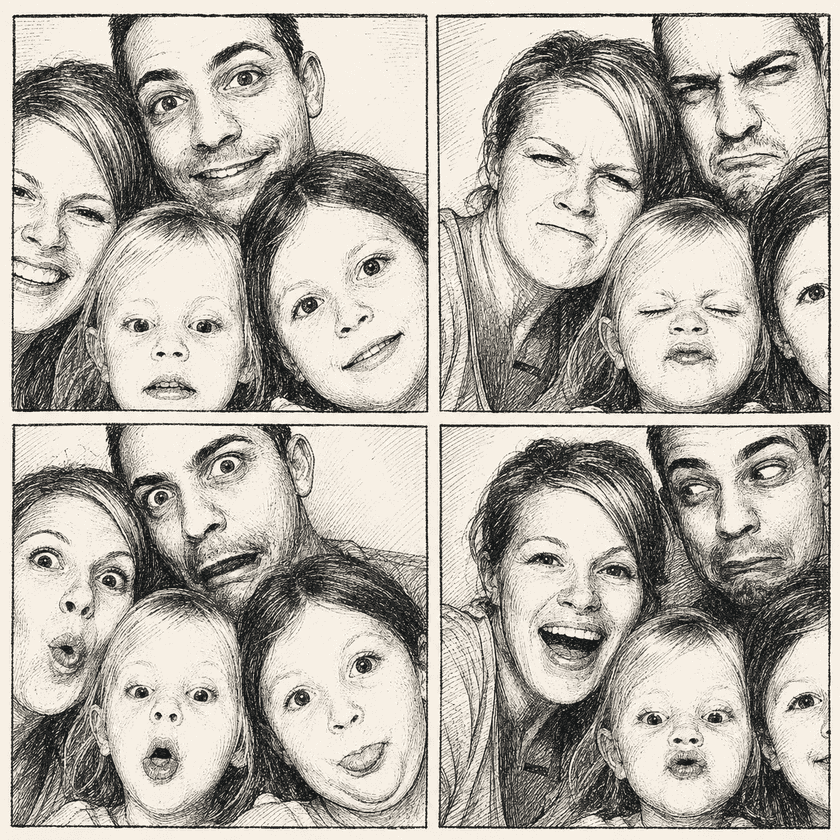
Three questions, each one needing more of me than the last
I was using AI for work, the way everybody is. What I noticed wasn’t that it got smarter. It was that every question I brought it needed more context than the one before — and the last one it could not answer at all, because the missing piece was me.
1
Prep the deck
“Turn my notes into a presentation, and draft the follow-ups.”
This one is easy. It needs the subject matter and my point of view on it — two things I can paste into a chat window in five minutes. Any AI does this well today, and it feels like magic the first time.
Context required: the topic, and what I think about it.
2
Navigate the organization
“How do I get this through, given who’s in the room?”
Now it needs the players. Who reports to whom, who owes whom, what happened in the reorg two years ago, which of them I trust and why. I found myself typing a light CRM into the chat every single time — and retyping it the next day, because it was gone.
Context required: the people, the history, the debts.
3
The one it couldn't answer
“Is it time for a change?”
To answer that, it would have to know everything about me. What I said I wanted at thirty and whether I still mean it. What the last two years cost at home. What I’m like when I’m travelling. What I’ve already regretted once. Not my résumé — my record.
That context did not exist anywhere. Not in a document, not in a chat history, not in my head in any form I could hand to something else. So I started building the place it would live.
Context required: everything.
Then it stopped being about work
Once there was a place to put a record of a life, the work questions turned out to be the least of what it was for. My girls are 13 and 15. They are old enough to ask real questions now, and close enough to leaving that I can count the years on one hand. Whatever I have not managed to tell them by then, I will be telling them long distance.
They also do not remember the early part — the drives, the arguments, the particular way their mother tells a story. I do, until I don’t. Every family has a person who remembers, and when that person goes the record goes with them; what’s left is a shoebox of photographs nobody can caption. That is the problem. The work questions were just how I found it.
And then I understood what I had already missed
Chrissy’s father died in December 2023. He was the closest thing I had to a father myself, and he was a spectacular storyteller — he had that many stories because he lived adventurously, and people were the through line of all of them. Hundreds of people came to his funeral.
“I wish I could have let your dad use this. I think the world would be a better place if those stories hadn’t vanished.”
Something I said to Chrissy, a couple of years too late.
That sentence is the whole product. Not a market insight that later found a story — the story came first, in a remark to Chrissy about her own father, and everything since is downstream of it. I missed that window by about two and a half years. It is the only part of this I am in a hurry about.
What this is not
The category this sits next to is full of things I would not use myself. So, plainly:
- Not a chatbot of you
- Nothing here impersonates anybody, living or dead. It keeps what you said, in your words, attributed to you.
- Not another AI
- I didn’t build a model, and I don’t want to. Use whichever one you already pay for. This is the context you bring to it.
- Not stored here
- Using the site doesn’t hand anything over. Your record is written into your own private repository as you make it — not into a database I control. You can read it, edit it, and carry it out the front door without asking. See The Compounding for why this matters.
- Not a memoir project
- No blank page, no chapter one. One question at a time, answered out loud, whenever you feel like it.
- Not finished
- It is a beta, run by one person. Some of it is rough and the rough parts are labeled.
Who’s building it
Derek. Mid-forties, twenty-odd years in enterprise software, currently a middle totem of a very tall pole. This gets built at four in the morning and on planes. If you write to the beta address, I’m the one who answers — there is no support team behind it, and the roadmap is whatever the people already using it complained about last week.
Two things came before this one, both from cycling. I made custom reflectors with the brightest tape I could source, because I wanted riders to be seen at night and nobody was making the thing I wanted. Then I spent a long time trying to rate American roads for how likely they are to kill you, so route planning could be about risk instead of popularity. One burned out; one is still technically unfinished. I am not a person trying to build a company. I am a person who can’t leave a problem alone once he has noticed it — which is either the wrong résumé for this or exactly the right one.
The person I have always looked up to was gentle, listened, believed in me, and never made anybody feel small. That is not a personality note. It is the specification for the thing in here that asks you questions — and the reason it will never nag you, score you, or tell you your record is 34% complete.
The rest of us are in the drawings: Chrissy, and the two who will inherit all of this whether they asked for it or not.
Sophia just turned fifteen. She taught herself to do nails, and she is better at it than I will ever be able to coach her on anything — which is the first thing that made me realize the useful record is not the milestone record. Nobody writes down that your kid got quietly good at something you can’t do.
Madelynn is thirteen. I interviewed her in the car recently, with her permission, and she corrected the question inside ten seconds — I asked for three bands and she pointed out that she mostly listens to solo artists, thanks. Then she told me the earliest thing she can remember: at about three she believed a cartoon character was standing outside our front door, because I had photoshopped it into a photograph and she took my word for it. Her first memory is a thing I made. A few minutes later she sang the chorus of Dancing Queen in the passenger seat.
That car ride is the closest thing I have to proof any of this works. Not one moment in it was a milestone. All of it would have been gone by Christmas.
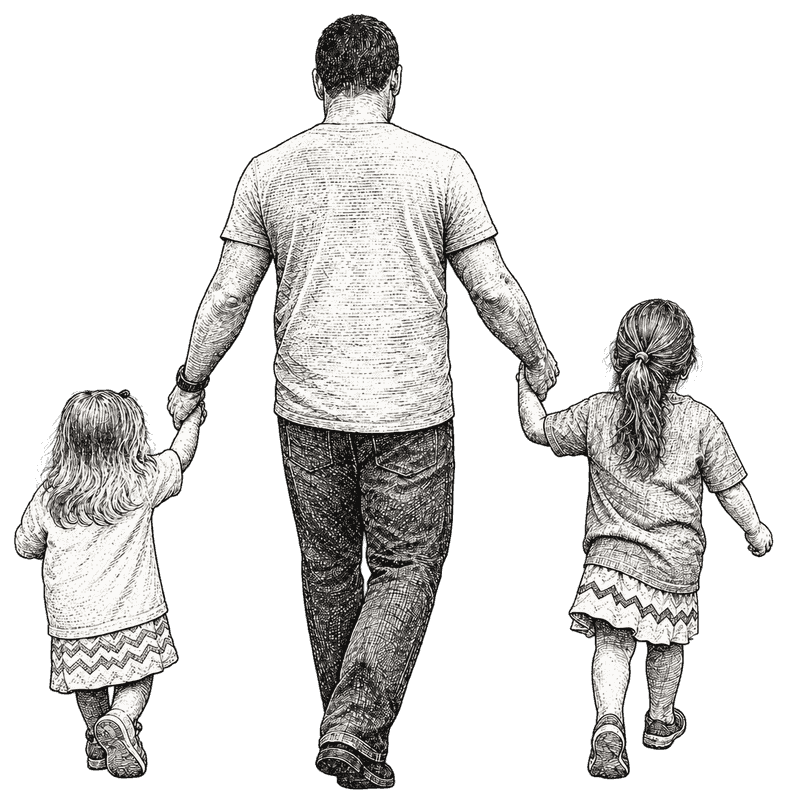
I have made peace with being a jack of all trades and master of none. It looks to me like a life well lived — and it is a terrible way to be remembered accurately by anybody who wasn’t there. So I am writing it down.
The readings
- The RecognitionWhat this is for: the moment a record of a life hands something back that you could not have reached on your own.
- The CompoundingWhat accrues once a life is held whole — and who it accrues to, which is not only you.
- The CorrectionThe honest account: what still goes wrong, what no instruction can reach, and what stays recoverable when it fumbles.
- The PracticalWhat you do with it, which is whatever you already do — and what that came to for the person who built it.
- The AugmentationThe aside: whether this is coming for people's work — and the line we draw before there is any money pressing on it.
Everything your AI should know — portable, private, and yours.
Of Me is invite-only right now. Use it with any AI, keep the context yours — invites and occasional research updates, no spam.
Of Me